November 19, 2026
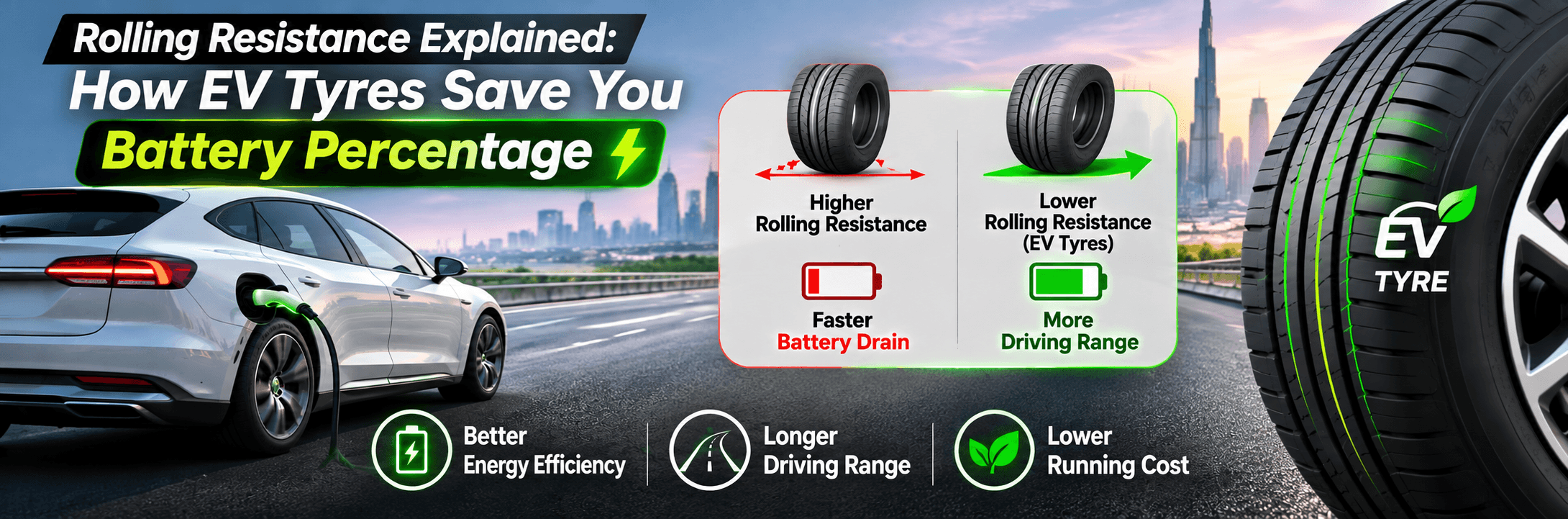
Rolling Resistance Explained: How EV Tyres Save You Battery Percentage
Reviewed By
Automotive Products Specialist, PowerTire
Ahmed supports operations at PowerTire, helping customers choose quality tyres and automotive products. He ensures reliable service and a seamless buying experience for every customer.
Tyre rolling resistance affects how much battery power an electric vehicle needs to move forward. It contributes approximately 10% of an electric vehicle’s (EV) overall energy consumption. The change in rolling resistance affects the driving range of an EV up to three times greater than in petrol vehicles
Electric vehicle owners often face one common concern about how to get more kilometers from a single battery charge. In this article, you will learn how tyre rolling resistance affects EV range, which factors increase energy loss and how manufacturers design EV tyres for better efficiency.
Rolling resistance is the force that works against a tyre as it moves across a road. Each tyre changes shape slightly when it meets the road surface. This repeated change creates heat and uses energy from the vehicle.
In an electric car this energy comes from the battery. When tyre resistance increases, the motor needs more power to maintain the same speed. Low rolling resistance tyres reduce this loss and support better battery efficiency.
Several tyre and road conditions affect the energy required to move an electric car. Here are the main factors that impact the rolling resistance in tyres for car.
Incorrect tyre pressure increases tyre deformation, heat and rolling resistance, making the EV battery work harder. Wider tyres can improve grip but may also increase rolling resistance due to their design and contact characteristics.
The rubber compound affects how much energy a tyre loses as it flexes. Some compounds reduce heat and bending which lowers rolling resistance. EV tyre makers use special rubber mixtures to balance energy efficiency, grip and tyre life.
Tread is the patterned part of the tyre that touches the road. Deep grooves and aggressive patterns create more movement and friction which raises rolling resistance and uses more energy. Smoother patterns reduce resistance but must still give enough grip for safe driving.
Electric cars are heavy because of their battery packs. More weight presses harder on the tyres making them bend more and raising rolling resistance. Extra luggage or excess passenger load adds further pressure.
Smooth roads create less rolling resistance, while rough or uneven surfaces require tyres to work harder, increasing energy use. Temperature also affects tyre pressure and internal heat, influencing rolling resistance.
Alignment means the wheels are set at the correct position and angle. Wrong alignment makes tyres drag instead of rolling straight. This adds friction, raises rolling resistance and wears tyres unevenly so the car uses more energy and loses range.
Damaged tyres, cuts, cracks and uneven tread wear affect road contact and increase resistance. Replace tyres when they reach the manufacturer's wear limit or show serious damage.
EV tyre have a different set of design requirements from standard car tyres. Here are four important design features that support better EV efficiency.
EV tyres use rubber compounds that reduce energy loss as the tyre flexes under vehicle weight. These materials also maintain a firm grip on the road and manage heat during long journeys.
EV tyre tread patterns aim to reduce unnecessary friction and road noise. Their grooves and tread blocks provide the grip required for safe movement on dry and wet roads. This design also supports stable contact with the road during acceleration and braking.
Manufacturers use carefully selected materials and internal structures to reduce unnecessary weight while retaining the strength needed for heavier electric cars. A strong tyre structure also manages the instant torque that EV motors deliver when the driver presses the accelerator.
Tyre shape and sidewall design affect how air moves around the wheel and how the tyre responds under pressure. Reinforced sidewalls also support the extra vehicle weight and maintain stability during turns and sudden changes in direction.
Small changes in tyre care and road habits reduce unnecessary energy use and support better battery performance. Here are six of them-
PowerTire offers EV-compatible tyres from established tyre brands like Michelin, Pirelli, Bridgestone, Continental, Kumho and Hankook. Its online EV tyre range includes options for different vehicle requirements and tyre specifications. Check available car tyres offer deals and compare prices before you place an order. Access tyre fitting and related services through PowerTire's service network in Saudi Arabia.
Please complete your information below to login.
Sign In
Create New Account