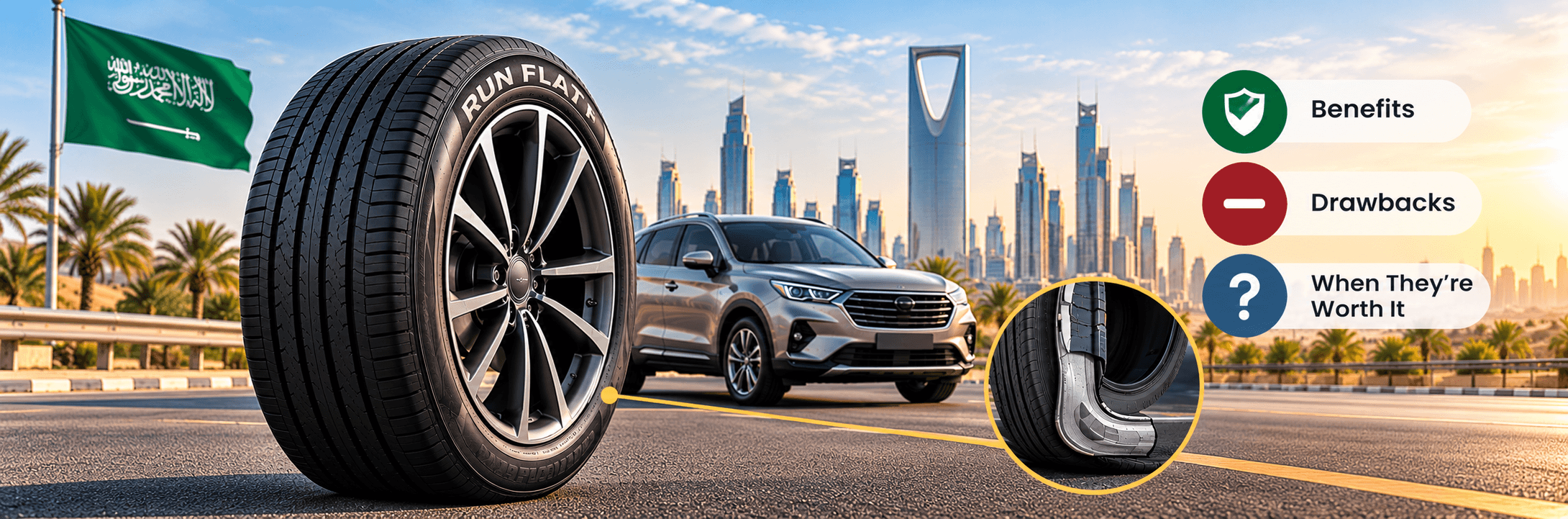
Run-Flat Tyres in Saudi Arabia: Benefits, Drawbacks & When They’re Worth It
- October 29, 2026
A
Reviewed By
Ahmed
Automotive Products Specialist, PowerTire
Ahmed supports operations at PowerTire, helping customers choose quality tyres and automotive products. He ensures reliable service and a seamless buying experience for every customer.
Reviewed on October 29, 2026
Run-flat tyres can be worth it in Saudi Arabia if you’d rather keep driving to safety after a puncture. You skip the roadside stop. They often cost more. They can offer a firmer ride, and they must be compatible with your vehicle. Whether they suit you depends on how you drive, your budget, and whether they're manufacturer-approved for your vehicle.
A run-flat tyre is built to carry a vehicle for a limited distance after it loses air pressure. It usually does that through reinforced sidewalls or a support-ring system. TPMS (Tyre Pressure Monitoring System) warns the driver when pressure drops. That matters a lot, because a run-flat tyre may not look flat even after it’s lost pressure.
How Do Run-Flat Tyres Work?
A conventional tyre relies on air pressure to support the car. When it loses pressure, you usually have to stop safely and arrange a repair or a replacement. Run-flat tyres use reinforced construction to support the vehicle for a while after pressure loss.
The limits depend on the tyre and the vehicle. For example, Michelin says certain run-flat tyres can travel up to 80 km at a maximum speed of 80 km/h after a pressure loss, under specified conditions. Actual distance and speed limits can vary by product, vehicle load, temperature, and road conditions. Always follow the tyre manufacturer’s instructions.
Run-flat technology doesn’t make a tyre puncture-proof. Sharp objects, sidewall damage, or severe impacts can still make a tyre unsafe to use.
What Are the Benefits of Run-Flat Tyres?
Below, we have put together crucial benefits of Run-Flat Tyres:
- Greater Convenience After A Puncture
The main advantage is that you may be able to reach a suitable repair centre after you lose pressure. You don’t have to change a wheel right beside a busy road. That helps on Saudi highways and on longer trips between towns, as long as the tyre stays within its permitted limits.
- Reduced Need For A Spare Tyre
Some vehicles with run-flat tyres don’t carry a regular spare wheel. That frees up boot space, and you don’t need to carry a spare and changing tools. Check your vehicle’s equipment before you assume you don’t need a spare.
- Temporary Mobility
A run-flat tyre can get you to a safe stopping place or a tyre workshop after certain punctures. It gives you temporary mobility. It doesn’t let you continue a normal journey indefinitely.
What Are the Drawbacks of Run-Flat Tyres?
Here we will cover the must-know drawbacks of run-flat tyres:
- Higher Purchase Costs
Run-flat tyres can cost more than comparable conventional tyres. It depends on the tyre size, model, and brand. Before you choose one, compare the full cost of a compatible set. Don’t judge a car tyre offer by its headline discount alone.
- A Firmer Ride
Reinforced sidewalls can make some run-flat tyres feel firmer over bumps and rough road surfaces. How much depends on the tyre design, the suspension, and the vehicle. If comfort comes first, compare the manufacturer’s specifications and reviews for the exact model.
- Repair Limitations
You can’t repair every punctured run-flat tyre. Driving underinflated can cause internal damage you can’t always see from outside. Whether a repair is allowed depends on the manufacturer’s policy, where and how bad the damage is, and how far the tyre was driven after losing pressure.
- Fewer Choices In Some Sizes
What’s available depends on the tyre size, the vehicle, and the market. When you’re buying tires in Saudi Arabia, check that the exact run-flat spec is in stock before you commit to a replacement set.
Are Run-Flat Tyres Suitable for Saudi Arabia?
They can suit drivers who regularly travel on highways, commute long distances, or would rather not change a tyre at the roadside. They may also suit vehicles that came with run-flat technology.
Saudi Arabia’s heat makes tyre maintenance extra important. Run-flat tyres still aren’t immune to high temperatures or damage. Keep tyre pressure to your vehicle manufacturer's recommendations, check your tyres regularly, and don’t overload the vehicle.
Do you drive often in the desert, on rough tracks, or on remote journeys? Think about your recovery plan too. Run-flat capability doesn’t promise a damaged tyre will stay driveable on sand or rough ground. Carry suitable recovery equipment and plan your trips around your vehicle and the conditions.
Can You Fit Run-Flat Tyres to Any Car?
No. Check the vehicle manufacturer’s approval before switching from conventional tyres to run-flat tyres. Compatibility can depend on the wheel rim, the suspension setup, the tyre specification, and the tyre-pressure monitoring system.
Michelin says its self-supporting run-flat tyres should only be fitted to suitable, approved vehicles and compatible rims. It also says the vehicle must have a TPMS to warn the driver of pressure loss. It recommends using four compatible run-flat tyres. Don’t mix run-flat and conventional tyres.
Always confirm the approved tyre size, load index, and speed rating. Matching the tyre size alone doesn’t prove the replacement is suitable.
How Should You Choose the Right Run-Flat Tyre?
Before you buy car tyres, check these:
- Tyre Size : Match the size approved for your vehicle, including width, profile and rim diameter.
- Load Index and Speed Rating : Meet the vehicle manufacturer’s requirements.
- Run-Flat Marking : Look for the relevant manufacturer’s marking, as the code varies by tyre brand.
- Vehicle Compatibility : Confirm the wheel, TPMS and vehicle are suitable for the selected tyre.
- Warranty and Repair Policy : Check what the tyre warranty covers and whether the manufacturer permits repairs.
- Total Price : Compare fitting, balancing, warranty and any additional charges when evaluating a tyre brand or special offer.
Don’t pick a run-flat tyre just because it’s discounted. The correct spec and compatibility matter more than the offer.
Conclusion
PowerTire offers an online selection of tyres, including run-flat options, from established tyre brands. You can browse products by tyre size and compare specifications. Then you can arrange installation through the available fitting options.
Visit PowerTire to explore our tyre range and current offers. Before you order, confirm that the run-flat tyre matches your vehicle’s approved specification. Check the total cost, installation availability, and warranty terms. The right tyre balances convenience, comfort, and cost for how you drive.
Frequently Asked Questions
Some models allow up to 80 km at up to 80 km/h. Limits vary. Follow the specific tyre manufacturer’s instructions. Stop sooner if handling gets worse or the tyre looks damaged.
Neither one is best for every driver. Run-flat tyres give you temporary mobility after certain punctures. Conventional tyres may cost less and ride more comfortably in some uses.
Sometimes, but not always. The manufacturer’s repair policy, the damage’s location and severity, and driving conditions after pressure loss decide whether a repair is allowed.
Many run-flat setups need a tyre-pressure monitoring system, because pressure loss may not be obvious to the eye. Follow the vehicle and tyre manufacturer’s requirements.
Only if the vehicle manufacturer approves the change and the replacement setup meets the vehicle’s requirements. Check the spare-wheel provision, TPMS, and any other fitment conditions first.
They can be, when they’re approved for the vehicle and properly maintained. They don’t remove the need for tyre inspections, safe driving, or a recovery plan for severe damage.
September 17, 2026
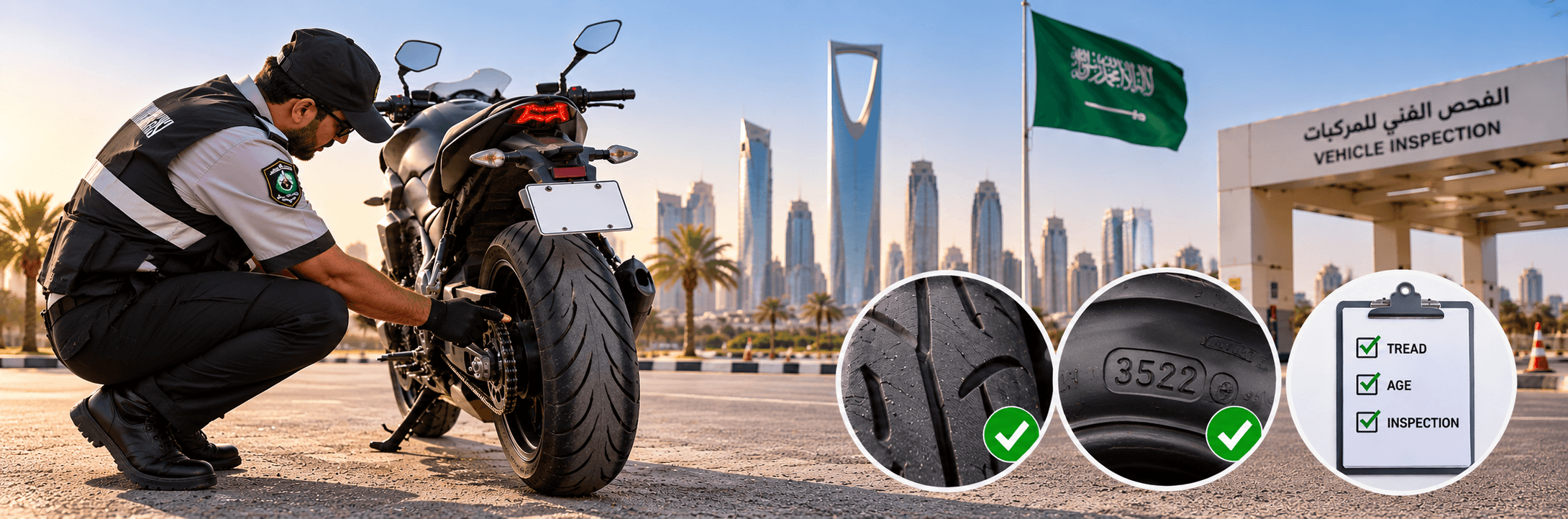
Motorcycle Tyre Rules In Saudi Arabia: Tread, Age And Inspection
Please complete your information below to login.
Sign In
Create New Account