September 17, 2026
Motorcycle Tyre Rules In Saudi Arabia: Tread, Age And Inspection
Reviewed By
Automotive Products Specialist, PowerTire
Ahmed supports operations at PowerTire, helping customers choose quality tyres and automotive products. He ensures reliable service and a seamless buying experience for every customer.
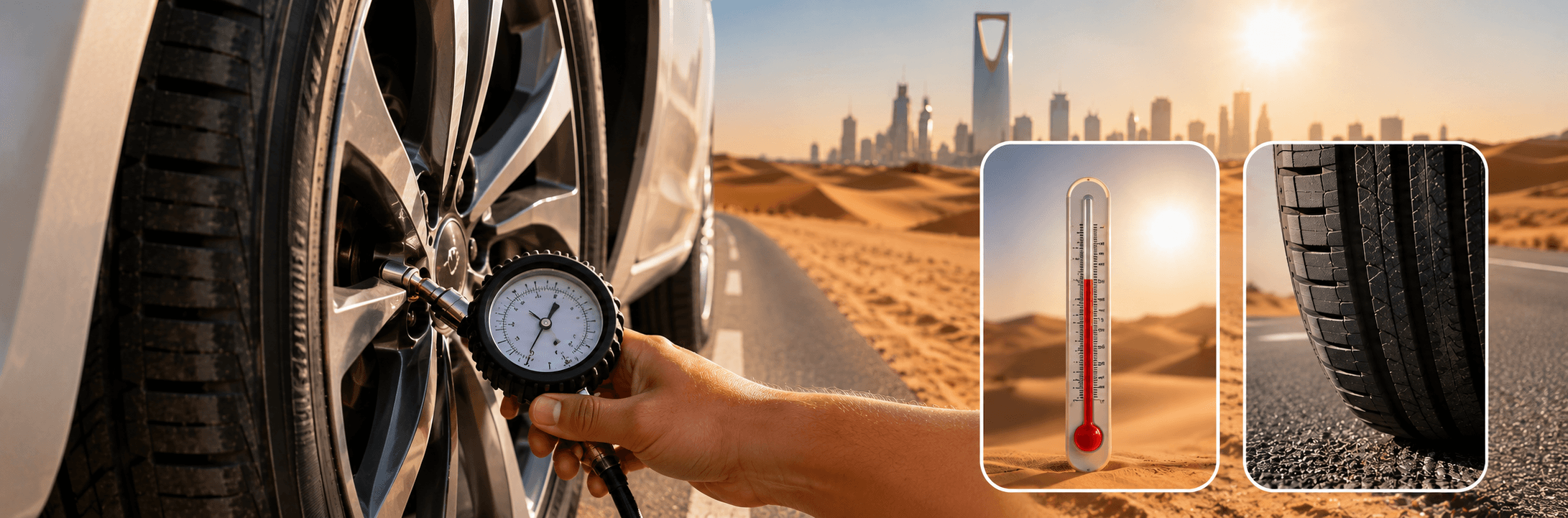
Maintaining the correct car tyre pressure during Saudi Arabia's summer is one of the simplest ways to improve vehicle safety, maximise tyre life, and reduce fuel consumption. Despite extremely high temperatures, drivers should not increase or decrease tyre pressure based solely on the weather because vehicle manufacturers specify cold tyre pressures that already account for normal operating conditions.
Tyres are engineered to operate at a manufacturer-specified cold inflation pressure that provides the correct balance between grip, braking performance, steering precision, ride comfort, and tyre durability.
The summer conditions in Saudi Arabia expose the car tyres to extreme temperatures, long highway use, and high temperatures of road surfaces, usually higher than the surrounding air temperature.
These conditions naturally increase tyre operating temperatures during driving, leading many motorists to believe that tyre pressure should be adjusted during summer. Understanding how temperature influences tyre pressure helps drivers avoid common maintenance mistakes that can reduce tyre life and compromise safety.
Tyre pressure is the amount of compressed air contained inside a tyre, measured in pounds per square inch (PSI) or kilopascals (kPa). Maintaining the recommended pressure allows the tyre to support the vehicle correctly, maximise road contact, improve braking performance, reduce rolling resistance, and extend tyre life.
Before understanding summer tyre pressure, two technical terms are useful. Cold tyre pressure refers to the pressure measured before driving or after the vehicle has remained parked for several hours. Hot tyre pressure refers to the pressure measured immediately after driving when heat generated inside the tyre causes the air to expand naturally.
No. The recommended cold tyre pressure as suggested by the manufacturer is not altered by any high temperatures.
As tyres warm during driving, the air inside expands naturally, causing tyre pressure to rise. Increasing the cold inflation pressure above the manufacturer's recommendation because of hot weather reduces the tyre's contact patch, affecting braking performance, steering accuracy, and overall vehicle stability.
The best measures to use are to inflate tyres to the cold pressure as recommended by the manufacturer.
Similarly, lowering tyre pressure below the recommended level is also unsafe. Tyres that are underinflated have more internal heat generated as they revolve, which creates further internal heat leading to faster tread wear, which causes more resistance to rolling, lower fuel efficiency, and an increased risk of having a tyre that bursts during extended long-distance driving in Saudi Arabia.
The proper tyre pressure in summer will be the cold tyre pressure on the label as put out by the car maker. This pressure is closely determined by the weight of the vehicle, the design of the suspension, tyre size, and the conditions under which the vehicle is expected to operate. Drivers should not worry about driving in outside temperatures and should look into the tyre pressure first before driving, instead of changing the pressure depending on the outside temperatures.
It is important to remember that the recommended pressure may differ between the front and rear tyres, and some vehicles provide separate recommendations for normal driving and fully loaded conditions.
Never exceed the pressure indicated by the manufacturer of tyres when inflating tyres. The increased pressure reading when driving is quite normal and must not, under any circumstances, be taken as the reference point for inflation.
The correct tyre pressure is indicated on a label as found inside the door frame or fuel filler cover of the driver. These specifications are more accurate than using a general PSI recommendation because they are based on the vehicle's weight distribution and tyre size.
The long highway commuting creates more heat in tyres compared to urban commuting. Checking tyre pressure before long highway journeys helps maintain vehicle stability, improve fuel efficiency, and minimise uneven tyre wear during extended high-speed driving.
Cars with more passengers or luggage might need other tyre pressure adjustments. The load ratings given by the producer should always be consulted before making long-range journeys.
Never rely on visual checks of tyre pressure. Approach a tyre with a good tyre pressure gauge to check that all tyres meet the cold pressure recommended by the manufacturer.
The hot weather in Saudi Arabia requires regular tyre pressure checks to be considered an element of car upkeep. Minor pressure losses can be cumulative over time and may go unnoticed until tyre wear, loss of fuel efficiency, or handling issues start to emerge. Regularly checking tyre pressure also contributes to your safety and prolonging the life of your tyres.
Recommended inspection schedule:
Tyre Pressure Monitoring System (TPMS) increases safety as it alerts the driver in case his or her tyre pressure drops below a specified threshold. Nevertheless, TPMS can be considered only a safety tool, not a substitute for routine maintenance, since most systems do not go off until the pressure has already dropped below the recommended specification.
TPMS sensors monitor tyre pressure but do not measure tread condition, tyre age, wheel alignment, or tyre damage, making routine manual inspections equally important.
Remember these important points:
The following table explains how tyre pressure normally changes as tyre temperature increases during everyday driving.
| Condition | Tyre Pressure Behaviour |
|---|---|
| Cold tyres before driving | Inflate to the manufacturer’s recommended PSI |
| After city driving | Pressure increases naturally due to heat |
| After long highway driving | Pressure may rise several PSI and is considered normal |
| After tyres cool completely | Pressure returns close to the original cold reading |
Maintaining the manufacturer's recommended cold tyre pressure is one of the most effective ways to improve tyre life, fuel efficiency, braking performance, and overall vehicle safety throughout Saudi Arabia's extreme summer conditions. Regular inspections and correct inflation help tyres perform as intended while reducing the likelihood of premature wear and unexpected roadside failures.
If you're planning to buy tires online Saudi Arabia, compare best tyre deals, or order car tyres online, PowerTire offers a wide selection of genuine tyres Saudi Arabia from leading international tyre brands. Along with professional tyre fitting, wheel balancing, and wheel alignment services, PowerTire helps drivers choose the right tyres for Saudi road conditions while ensuring reliable long-term performance.
Please complete your information below to login.
Sign In
Create New Account