Alloy vs Steel Wheels: Which Is Better for Driving in Saudi Arabia
- May 29, 2026
A
Reviewed By
Ahmed
Automotive Products Specialist, PowerTire
Ahmed supports operations at PowerTire, helping customers choose quality tyres and automotive products. He ensures reliable service and a seamless buying experience for every customer.
Reviewed on May 29, 2026
Whenever drivers consider upgrading their car tyres are the first thing that comes to mind. Nonetheless, the use of wheels is as significant to the vehicle's performance, feel, and handling on the road. Alloy or steel wheels are not only a matter of appearance but also directly influence durability, heat, comfort during driving, and maintenance.
And in Saudi Arabia, this option is even more significant. Different kinds of stress on wheels are caused by long highway drives, extreme road temperatures, city traffic, and rough-road conditions. One wheel might not necessarily work in a different environment.
This is why you need to understand the distinction between alloy and steel wheels before comparing car wheels price or deciding to purchase wheels online.
What Are Alloy Wheels and Steel Wheels?
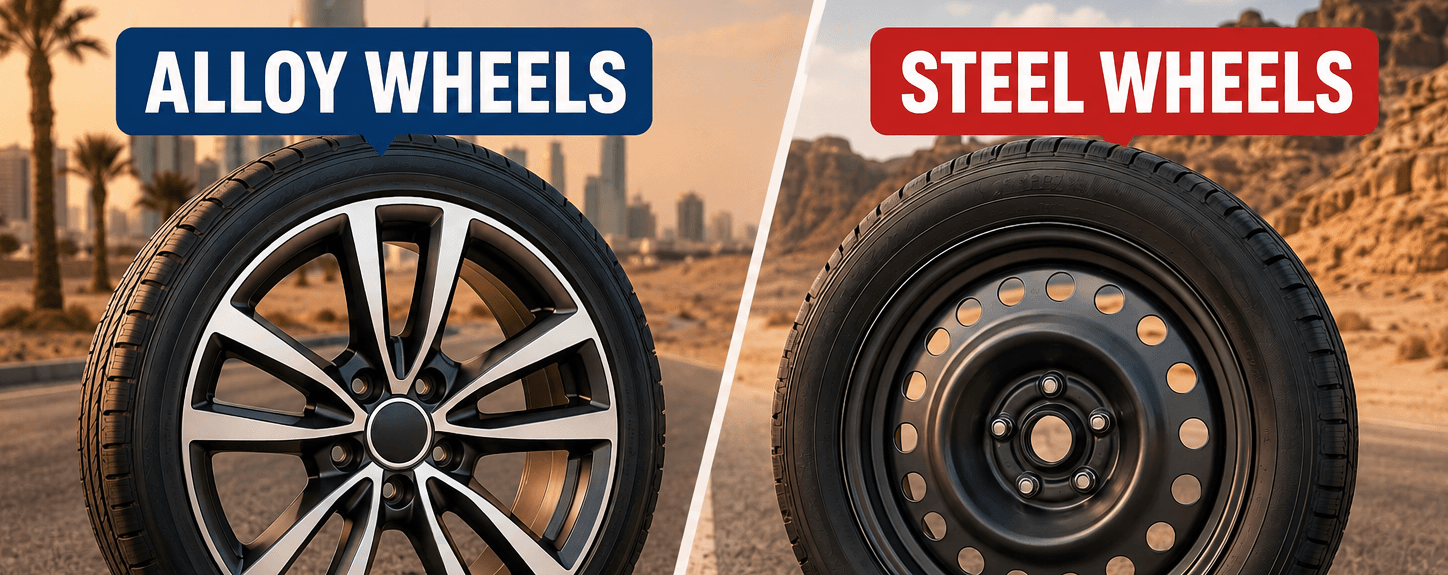
Aluminum and other metals are blended to make alloy wheels, which are lighter, fancier, and more efficient at heat management. On the other hand, steel wheels consist of pressed steel and are reputed to be strong, simple, and cheaper. Both are used to the same effect, to support the tyre and keep it in touch with the road, but they act differently when subjected to actual driving conditions.
Main difference between the two:
- Alloy wheels focus on lighter performance
- Steel wheels focus on strength and cost
- Alloy offers better design variety
- Steel offers easier repair in some cases
Why Does Wheel Choice Matter More in Saudi Arabia?
The Saudi driving environment produces special pressure on wheels. Distance, heat, and road conditions have a more varied impact on wheel performance than most drivers anticipate. This is why it is important to select the appropriate wheel type, not just based on appearance.
- Heat Exposure Changes Wheel Performance
Saudi road temperatures are long-lasting. Heat affects tire pressure, the braking system, and wheel temperature, and hence heat management is significant.
- Long Highway Driving Increases Stress
Driving on long-distance highways results in continuous wheel load, particularly at high speeds.
- Urban Roads Create Daily Impact
Repeated wheel stress over time is due to speed bumps, parking curbs, and the road conditions in a city.
- Wheel Weight Affects Fuel Use
Wheel weight will affect the vehicle's efficiency, particularly when driving in the city frequently.
Alloy Wheels: Where They Perform Better
The popularity of alloy wheels has increased, as they are not purely about appearance. They enhance driving behavior in normal and performance-oriented conditions; this is their greatest strength.
- Better Heat Dissipation
Compared to steel, alloy wheels dissipate heat more quickly. This enhances brake cooling and reduces heat buildup during long highway journeys, which is valuable in Saudi circumstances.
- Lighter Weight Improves Efficiency
Alloy wheels are lighter, and therefore, it does not take much effort to move the car. This enhances fuel economy and suspension stress.
- Better Handling Response
Reduced wheel mass enhances steering response and handling. A sharper handling and driving comfort are common among the drivers.
- Wider Design Options
Alloy wheels also have a wide range of styles, finishes, and sizes, much more than steel wheels, and they are much more popular with drivers who are planning on purchasing a car rim.
Steel Wheels: Where They Still Make Sense
Steel wheels remain relevant because they address a range of issues. They are not very performance-oriented, they are more practical and strong.
- Better for Heavy Impact Use : Hard hits are taken differently using steel wheels. They do not crack but tend to bend and this may be easier to repair.
- Lower Purchase Cost : Low-cost car wheels are typically made of steel and can be used as replacements by budget-conscious people.
- Better for Rough Usage Conditions : On harsher, rougher roads, steel wheels may still be viable due to their ease of manufacture.
- Easier Replacement Decisions : Due to the affordability of steel wheels, it is easy to make upgrades in case of damage.
Alloy vs Steel Wheels: Quick Comparison
The two types of wheels address various needs. The more viable choice is based on the driving habits, car type, and long-term priorities.
| Factor | Alloy Wheels | Steel Wheels |
|---|---|---|
| Weight | Lighter | Heavier |
| Heat Management | Better | Lower |
| Fuel Efficiency | Better | Lower |
| Cost | Higher | Lower |
| Design Variety | High | Limited |
| Impact Behavior | May crack | More likely to bend |
What Most Saudi Drivers Get Wrong While Choosing Wheels?
Most drivers choose wheels based on either appearance or cost. But wheels affect performance, comfort, and durability. The misplaced decision leads to compromises that the drivers may only realize after installation.
- Choosing Only Based on Looks : An elegant wheel can be appealing, yet it might be inappropriate in the real-life context of driving. Form is as good as design.
- Ignoring Driving Conditions : People who drive usually use performance-oriented wheels without considering road conditions, heat, or usage patterns.
- Comparing Only Purchase Price : A higher discounted initial cost can reduce direct costs, but increased weight can affect fuel consumption and durability.
- Choosing Wrong Wheel Size : The size of the wheels influences the ride quality, the tyre fitment, and the suspension characteristics. Mismatched sizing brings about unwarranted driving problems.
How to Choose the Right Wheels for Your Driving Style
The right wheel is not so much concerned with what is better but the use of the vehicle. The most important thing is driving style.
- Daily City Driving : Alloy wheels tend to be more comfortable and efficient, and have superior road feel due to their lighter-weight construction, especially in daily driving.
- Long Highway Driving : Alloy wheels are also advantageous for long-distance highway drivers, as heat management and reduced weight enhance long-distance performance.
- Heavy-Duty or Rough Usage : In more demanding applications, steel wheels may still be viable due to their impact resistance and reduced replacement price.
- Style-Focused Upgrades : The drivers who intend to use a rims online shop for a visual upgrade typically choose alloy wheels for their expanded finish and style options.
- Budget-Focused Replacement : When affordability is the primary objective, steel wheels can still be a viable choice.
Conclusion
Whether to use alloy or steel wheels is up to you, depending on what is most important to you: performance, longevity, style, or price. Alloy wheels are superior in terms of heat dissipation, weight, driving response, and design flexibility, and are the best fit in most contemporary driving environments in Saudi Arabia.
PowerTire provides a specialized rims online shop featuring alloy wheels and rims to drivers who want to compare their wheels, check the price of car wheels, or purchase wheels online, offering a greater range of options and installation services. You need to upgrade to performance or want to purchase car rims without worry. PowerTire simplifies the process to buy car rims by comparing online, offering high-quality options, and providing local installation services.
Frequently Asked Questions
Alloy wheels are generally better for Saudi Arabia because they are lighter, dissipate heat more efficiently, and improve handling. They are ideal for daily driving and long highway journeys in hot weather.
Steel wheels are a practical option if you frequently drive on rough roads, carry heavy loads, or want a more budget-friendly solution. They are durable, easy to repair, and cost less than alloy wheels.
Yes, alloy wheels are lighter than steel wheels, which reduces the vehicle's overall weight. This can improve fuel efficiency and reduce strain on the suspension and braking system.
Both wheel types require regular cleaning and inspections, but alloy wheels need extra care to prevent cosmetic damage. Steel wheels are generally easier and less expensive to repair if they become bent or scratched.
Choose wheels based on your driving style, road conditions, vehicle specifications, and budget. If you're unsure, the experts at PowerTire.sa can help you select the best alloy or steel wheels for your driving needs.
September 17, 2026
Motorcycle Tyre Rules In Saudi Arabia: Tread, Age And Inspection
September 11, 2026
Michelin LTX vs Bridgestone Dueler- Which Is Better for Saudi SUVs?
Please complete your information below to login.
Sign In
Create New Account